





Alejandro Álvarez Laguna receives the CNRS Bronze Medal
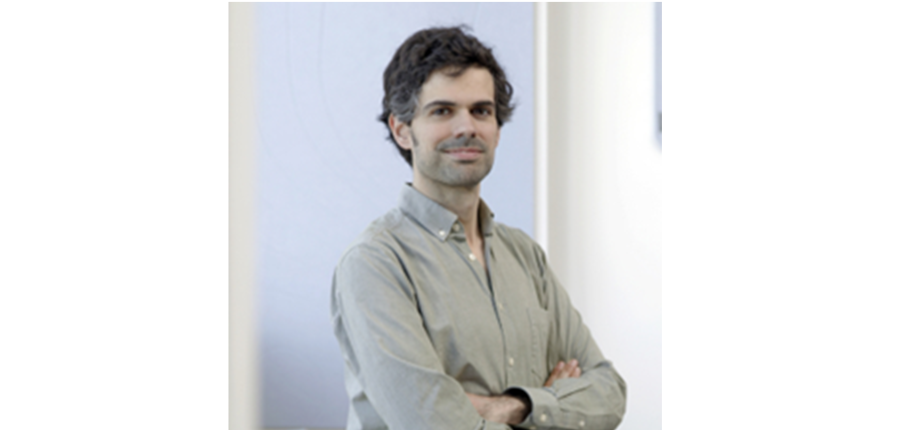
The Laboratoire de Physique des Plasmas congratulates Alejandro Álvarez Laguna, CNRS Research Scientist at LPP, on being awarded the CNRS Bronze Medal. This distinction recognises his work on non-equilibrium plasmas, conducted at the interface between physics, applied mathematics and numerical simulation. His research contributes to a better understanding of these complex media and opens up new perspectives for more efficient, more sustainable and less costly space propulsion.
Trained as an aeronautical engineer at the Universidad Politécnica de Madrid, Alejandro Álvarez Laguna continued his studies with a master’s degree in fluid dynamics at the Von Karman Institute, followed by a PhD at KU Leuven, carried out in collaboration with NASA. After postdoctoral research at LPP and at the Centre for Applied Mathematics of École Polytechnique, as well as research stays at Stanford and NASA, he joined the CNRS in 2020.
His work focuses on plasmas composed of charged and neutral particles, subjected to electromagnetic fields and evolving far from thermodynamic equilibrium. Under these conditions, physical phenomena combine in complex ways: collisions, chemical reactions, electrostatic instabilities, heat transport and viscosity effects. To describe them more accurately, Alejandro Álvarez Laguna develops theoretical and numerical models that go beyond the limitations of classical approaches.
His approach is based on so-called hybrid methods. Fluid models are fast but sometimes overly simplified, while kinetic models are more precise but computationally very expensive. By building intermediate descriptions, he is able to better capture the richness of plasma behaviour while retaining tools that can be used for simulation and the design of real devices.
This research addresses a major challenge for the space sector. Electric propulsion for satellites currently relies heavily on xenon, a rare and costly gas. Finding alternatives has become crucial, but each new propellant profoundly changes the behaviour of the plasma. The tools developed by Alejandro Álvarez Laguna therefore make it possible to better predict these effects and support the design of more efficient thrusters.
At LPP, his research is carried out in an environment combining fundamental research, advanced modelling, experimentation and industrial collaborations. Through his ERC-funded project HiMomPlas, Alejandro Álvarez Laguna is now pursuing this ambition: transforming theoretical advances into practical tools for the space propulsion of tomorrow.