





Plasmas for the Environment
The LPP conducts advanced research on atmospheric-pressure cold plasmas, exploring their environmental applications through several main research directions:
Atmospheric plasmas often exhibit a filamentary structure, characterized by ionized channels propagating over a few millimeters within nanoseconds. “Plasma jets,” which are discharges in noble gases such as helium, are key tools for studying these phenomena.
At the LPP, time-resolved diagnostics and fluid simulations are developed to analyze the interaction between these jets and surfaces, particularly liquids, in order to understand the ionization mechanisms and associated energy transfer processes.
The coupling between cold plasmas and porous catalysts represents a promising approach for air pollution control and treatment of gaseous effluents. The objective is to optimize plasma filament generation and their chemical reactivity depending on the targeted pollutants.
The LPP investigates the physical and chemical interactions between plasma filaments and catalytic materials in order to improve the efficiency of conversion processes and the reduction of harmful emissions.
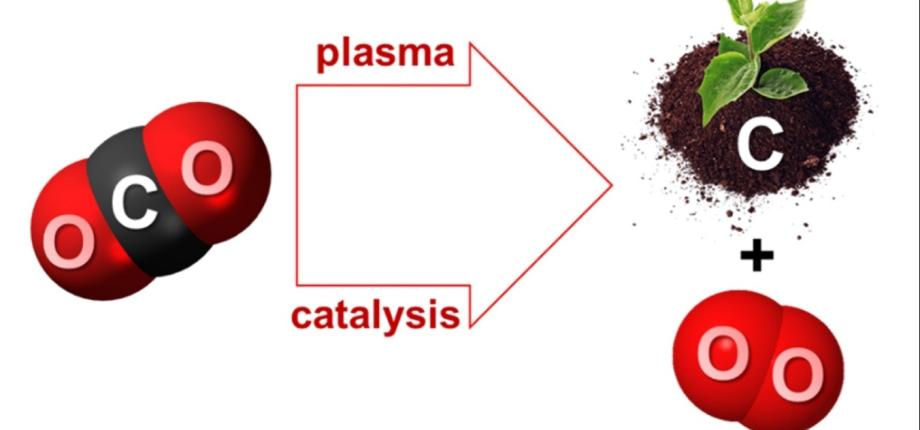
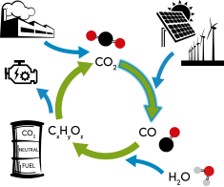
In response to the climate challenge, the conversion of carbon dioxide into higher-energy-value molecules is a major research direction. Cold plasmas powered by renewable energy sources enable selective activation of CO₂, particularly through vibrational excitation favored by the mean electron energy.
The LPP works on optimizing these processes to maximize the energy efficiency of the induced chemical reactions, thereby contributing to the development of chemical energy storage solutions.
Plasmas generated directly in water, between two immersed electrodes, produce branching filamentary structures capable of dissociating water molecules and generating reactive radicals. These chemical species can efficiently degrade organic and toxic pollutants present in liquids.
The LPP develops fast imaging diagnostics to observe the dynamics of these discharges and to understand plasma propagation mechanisms in dense liquid media.
Microplasmas, which emerged in the 1990s, enable plasma generation at medium and high pressures with relatively low breakdown voltages. At the LPP, micro-discharges of the “micro-hollow cathode” (MHC) type are studied using sandwich structures composed of molybdenum–alumina–molybdenum layers perforated with micro-orifices.
The discharges are characterized using electrical, spectroscopic, and imaging methods, complemented by 1D modeling to analyze the distribution of active species.