





News

12 Jun. 2026
Pierre GUILLON successfully defended his doctoral thesis on the transport modelling for fusion devices using reduced models for turbulence
Congratulations to Pierre Guillon, who successfully defended his thesis entitled “Transport Modelling for Fusion Devices Using Reduced Models for Turbulence” Absract The goal of this thesis is to develop and improve reduced models for turbulent transport...
12 Jun. 2026
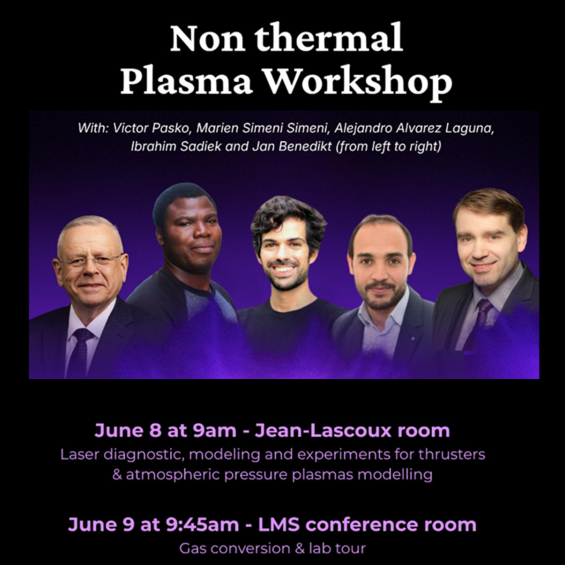
Non-Thermal Plasma Workshop: Recent advances in diagnostics, modeling and applications
On June 8 and 9, the LPP organized a workshop devoted to non-thermal plasmas, bringing together several international specialists to discuss current challenges in plasma diagnostics, modeling, and applications. The first day was held in the Jean-Lascoux...
25 May. 2026
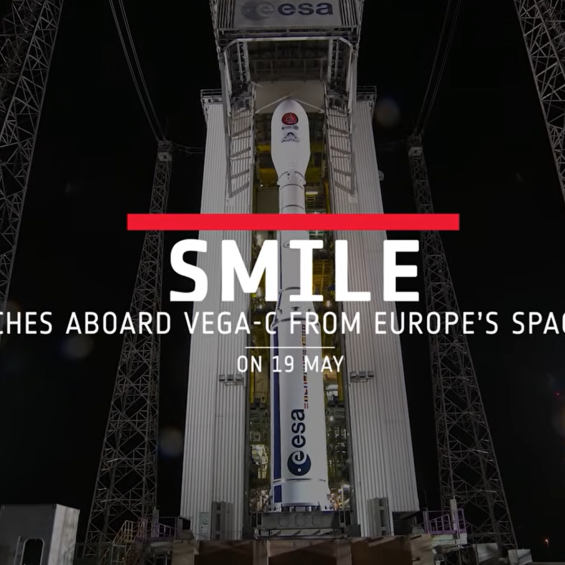
Smile: a new space mission to observe Earth’s magnetic shield
The Smile space mission was successfully launched on 19 May 2026 aboard a Vega-C rocket from Europe’s Spaceport in Kourou, French Guiana. Jointly led by the European Space Agency and the Chinese Academy of Sciences, Smile (Solar wind Magnetosphere...
25 May. 2026
Vincent David awarded the 2024 René Pellat Prize
Vincent David has been awarded the 2024 René Pellat Prize, a PhD thesis prize granted by the Plasma Division of the French Physical Society. This distinction recognizes his work on multi-scale turbulence in the solar wind. Vincent David completed his PhD...
04 May. 2026
Alejandro Álvarez Laguna receives the CNRS Bronze Medal
The Laboratoire de Physique des Plasmas congratulates Alejandro Álvarez Laguna, CNRS Research Scientist at LPP, on being awarded the CNRS Bronze Medal. This distinction recognises his work on non-equilibrium plasmas, conducted at the interface between...
26 Apr. 2026
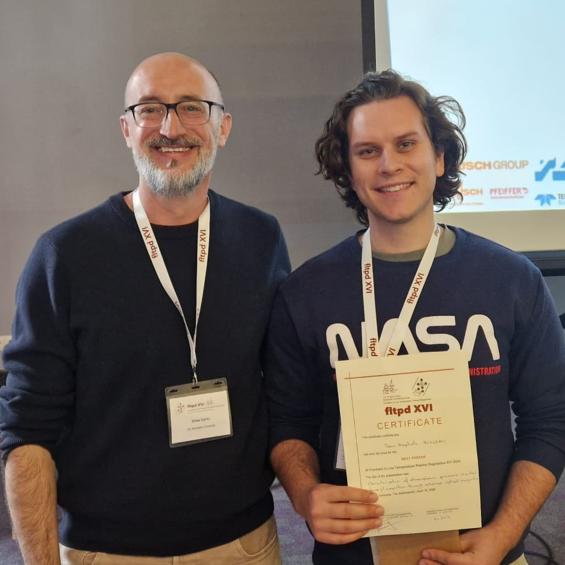
Jean-Baptiste Billeau awarded at FLTPD XVI
Jean-Baptiste Billeau was awarded the Young Researcher’s Best Poster Prize at the Frontiers in Low Temperature Plasma Diagnostics (FLTPD XVI) conference, held in Kerkrade, the Netherlands. The prize recognized the poster entitled “Characterization of...

16 Apr. 2026
Lina Hadid receives the SF2A 2026 Young Researcher Award
The Laboratoire de Physique des Plasmas warmly congratulates Lina Hadid, CNRS research scientist at the laboratory, who has been awarded the 2026 Young Researcher Award by the French Society of Astronomy and Astrophysics (SF2A). With this distinction, the...
09 Apr. 2026
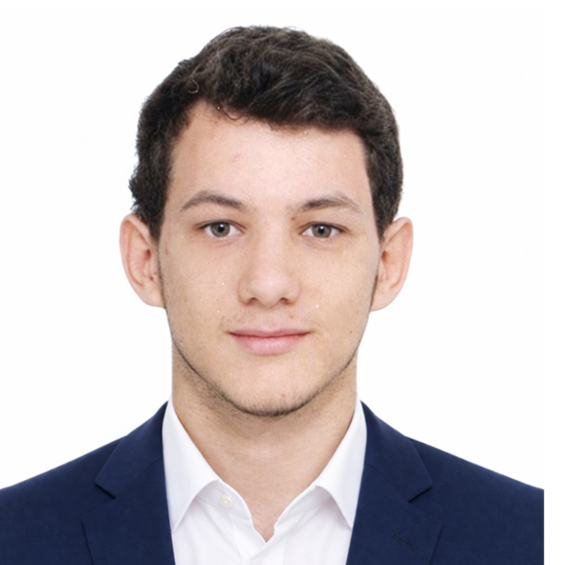
Congratulations to Korentin Géraud on successfully defending his PhD thesis in plasma medicine
Congratulations to Korentin Géraud on successfully defending his PhD thesis entitled “Cold plasma endotherapy applied to oncology: from the physics of guided streamers to feasibility and therapeutic efficacy in preclinical models” on March 24, 2026...

09 Apr. 2026
Congratulations to Ayah TAIHI on successfully defending her PhD thesis (Plasma–interface coupling in semiconducting barrier discharges).
Congratulations to Ayah TAIHI on successfully defending her PhD thesis entitled “Plasma–interface coupling in semiconducting barrier discharges” on March 27, 2026. Abstract While Dielectric Barrier Discharges (DBDs) are widely used for atmospheric...
10 Mar. 2026
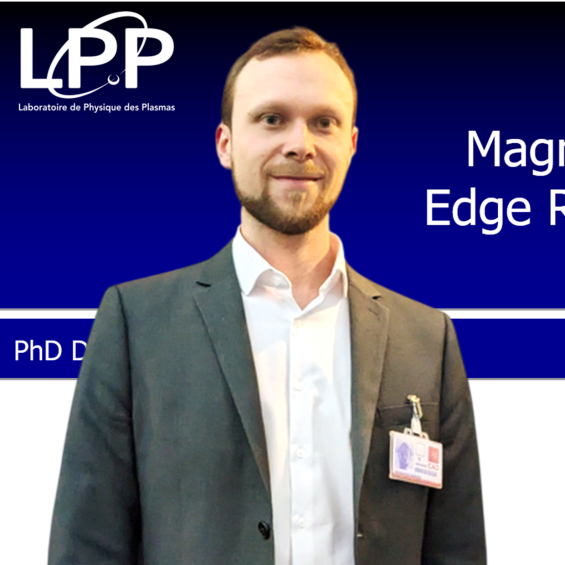
Congratulations to Sascha Rienäcker for successfully defending his thesis titled “Impact of Magnetic Geometry on the Edge Radial Electric Field in Tokamaks”
Congratulations to Sascha Rienäcker for successfully defending his thesis titled “Impact of Magnetic Geometry on the Edge Radial Electric Field in Tokamaks” on March 9th, 2026. Abstract Mitigating plasma turbulence is a major objective of magnetic...
10 Mar. 2026
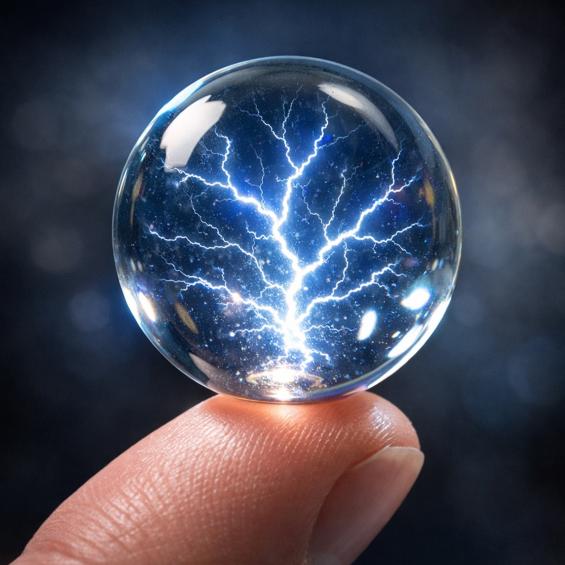
Relativistic feedback discharges in dielectric solids
Relativistic feedback discharge processes are believed to be responsible for intense gamma-ray flashes produced in atmospheric thunderstorms. These phenomena occur over length scales of several hundred meters and could not previously be reproduced in the...
06 Mar. 2026
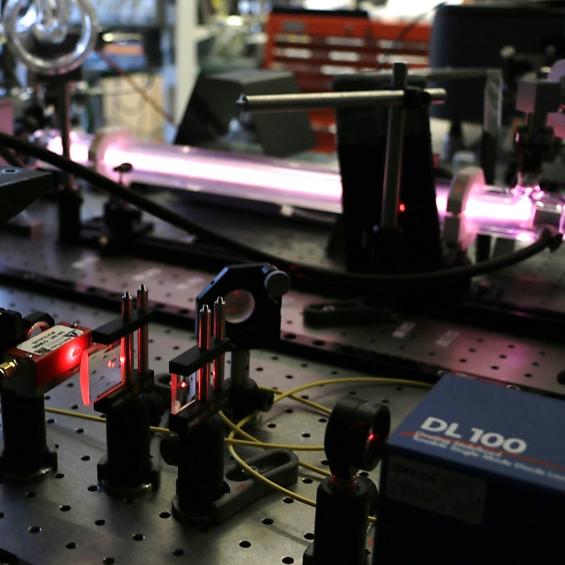
Validation of actinometry techniques by benchmarking against CRDS and E-field probes in an O2 glow discharge
Measurements of absolute atomic oxygen density and reduced electric field are crucial for the understanding and development of plasma-based technologies. Probing them, however, usually requires active methods that are either perturbative or highly costly...